
Culture at Niagara District Airport

A Place Shaped by Niagara
Beyond aviation, Niagara District Airport is a shared space shaped by the people, stories, and character of the Niagara region.
Rooted in a community known for its rich history, vibrant local culture, and strong sense of identity, the airport reflects the spirit of the place it serves.
With a long-standing presence in the region, Niagara District Airport brings together aviation activity, community connection, and a meaningful sense of place.
The airport is not only a point of arrival and departure, but also a gathering point where local traditions, partnerships, and experiences intersect.
From commemorative features that honour regional history to thoughtfully displayed local art, our airport reflects the culture of the Niagara community. The everyday rhythm of activity on the airfield is part of that story.
Together, these elements show how the airport continues to evolve alongside the region, supporting connection, celebrating its surroundings, and remaining closely tied to the people it serves.
Celebrating Niagara’s History & Culture
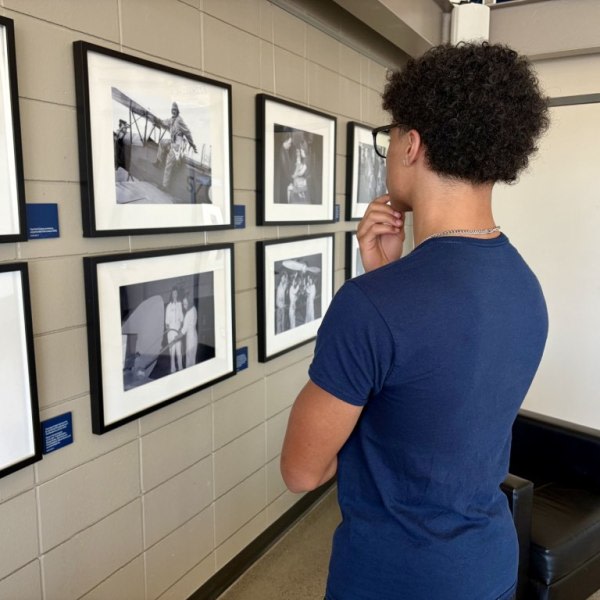
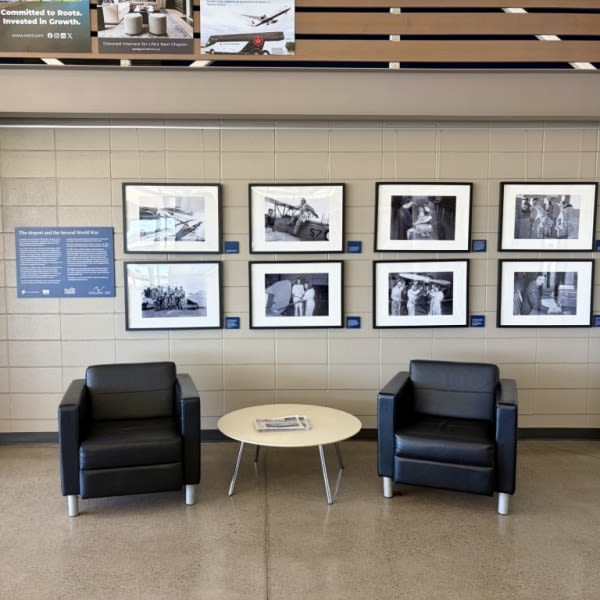
Niagara District Airport works in partnership with the St. Catharines Museum to preserve and share our history with curated historical features within the terminal. The airport also features artwork of local artists, including Niagara Plein Air Artists, to help share Niagara’s unique character with visitors.


High Flight: An Aviation Legacy
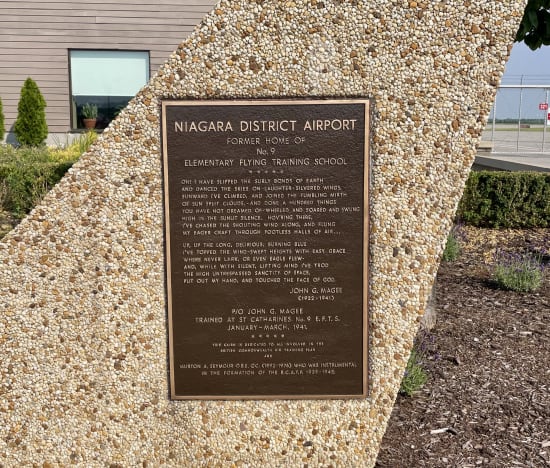
Written in 1941 by Royal Canadian Air Force pilot John Gillespie Magee Jr., High Flight is one of the most celebrated poems in aviation history.
Magee trained at the No. 9 Elementary Flying Training School (EFTS No. 9), located at Niagara District Airport from 1940 to 1944. During a high-altitude test flight in England above 30,000 feet, Magee was inspired to write the poem's now-famous lines.
He sent the poem to his parents on the back of a postcard just months before tragically losing his life in a mid-air collision at the age of 19. Published after his death, the poem has since become a lasting symbol of the beauty, freedom, and wonder of flight — an enduring source of inspiration for the aviation community.
Today, the High Flight plaque stands out front of our terminal building as a tribute to Magee, the pilots who trained at EFTS No. 9, and all those who served during the Second World War. More than a memorial, it is a place of reflection that connects visitors to a historic chapter of local and aviation history, preserving the legacy of a poem that continues to inspire people around the world.